
When Diesel Becomes Backup: Battery Duty, Depth of Discharge and O&M at Off-Grid Telecom Sites
Taking the diesel engine off primary duty does not simplify the battery's job. It hands the pack the daily energy balance instead of an occasional emergency. The battery now absorbs whatever the array produces beyond the load, carries the site through every night without a fuel check in between, and still has to hold enough in hand for a week the sun does not show up. Most of the failures that surface months after a diesel-backup cutover are not hardware failures. They are three agreements that were never written into the design: how deep the pack is allowed to cycle against how much is held in reserve, what the thermal envelope actually is at that site, and which alarms reach someone before the site goes dark.
What changes when the genset stops being the base case
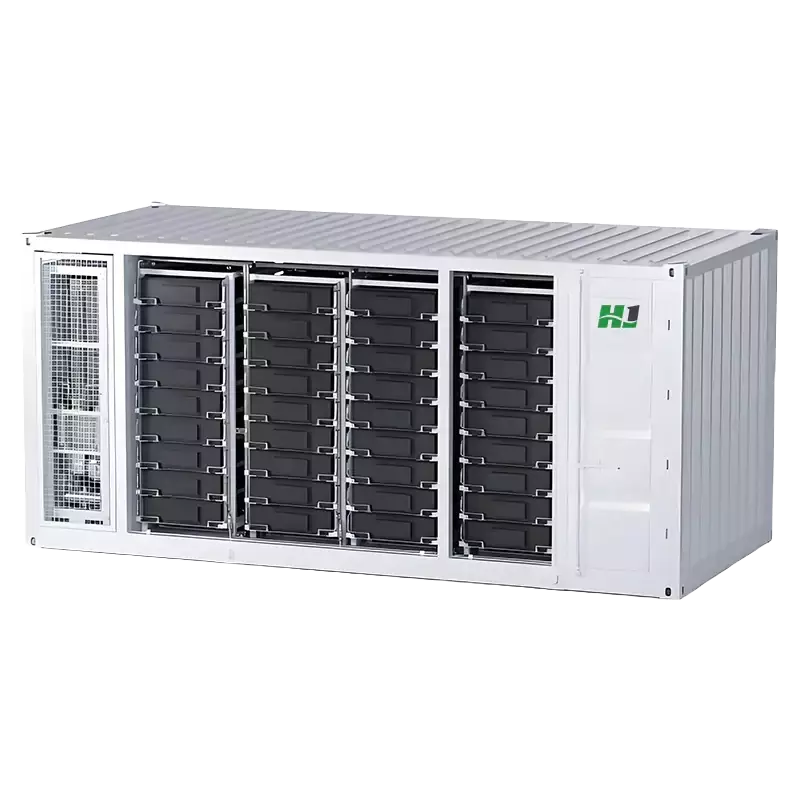
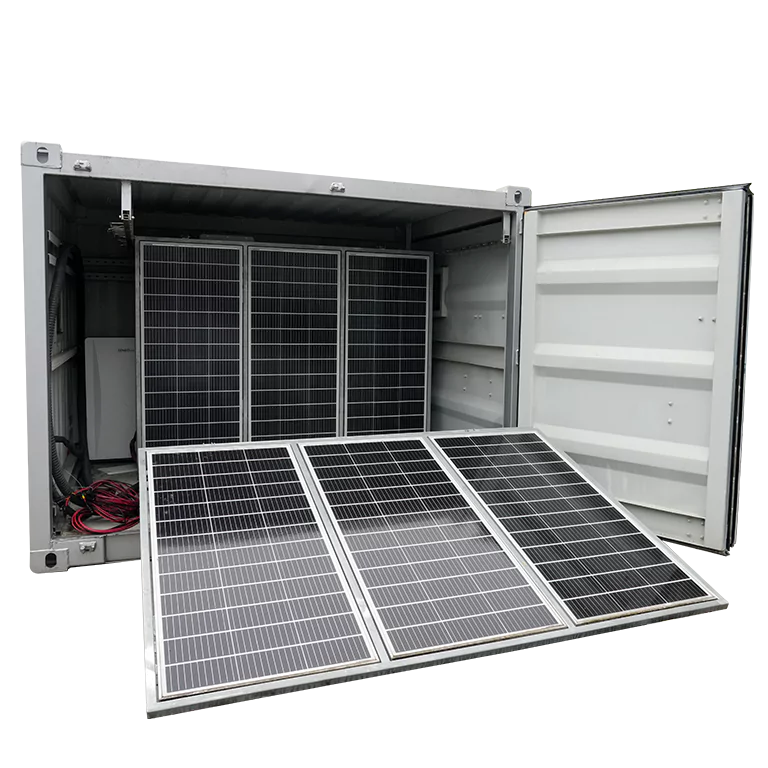
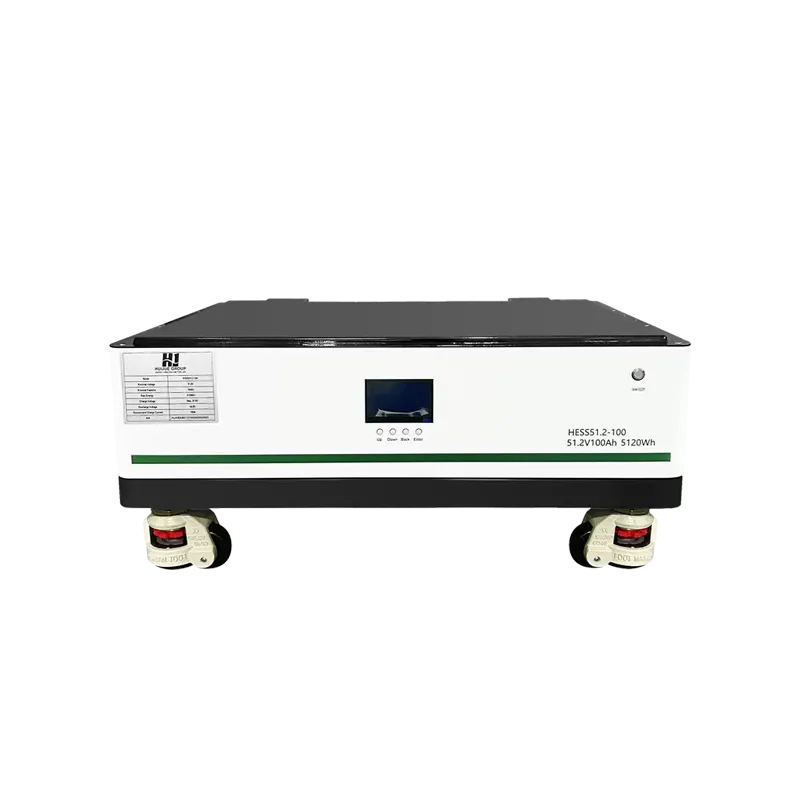
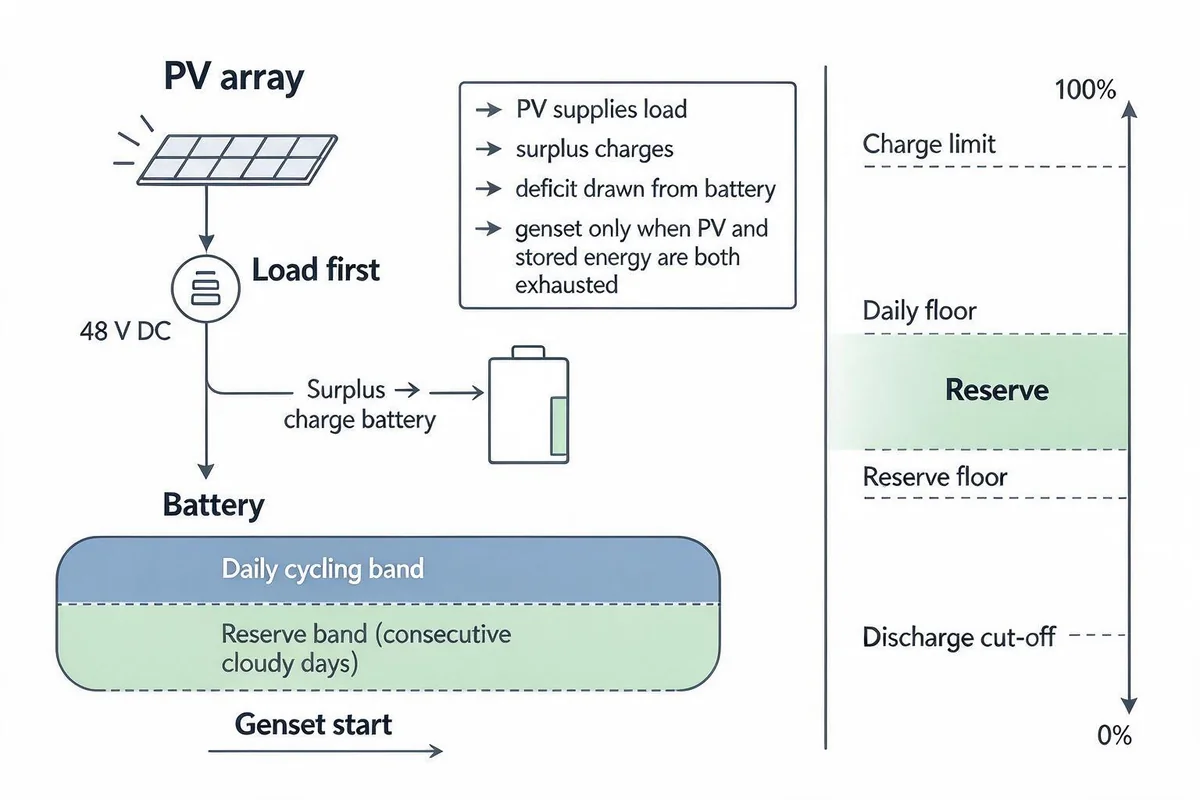
At an off-grid or weak-grid site the energy flow follows a fixed priority. The array supplies the load first, surplus production charges the battery, and shortfalls come out of the battery. The genset starts only once both the instantaneous solar resource and the stored energy have been exhausted. Highjoule's hybrid site cabinets are built around that order, optimising energy use as solar or wind first, then battery, then grid, then diesel generator; the site battery cabinet brings PV modules, diesel gensets and grid input under one EMS that switches between sources.
On paper the order looks like a diesel site with extra equipment attached. In operation it transfers a category of work to the battery that the genset used to absorb. A generator on continuous duty holds the DC bus up regardless of weather and takes the cycling burden itself, leaving the battery as a bridge between runs and a short ride-through for outages. Once the generator becomes the last resort, a cloudy afternoon, a long summer night and a shortfall between forecast and actual yield all become charge-discharge events. The pack accrues throughput continuously rather than occasionally.
That shift has a consequence the commissioning sheet often misses. A backup battery is judged by how much energy it can hand over in one emergency. A cycling battery has to be judged on that and on how many cycles it will survive doing the everyday work. Both come out of the same capacity, so the design has to decide, explicitly and in writing, how the pack's usable window is divided.
Agreement one: split the depth of discharge from the reserve band
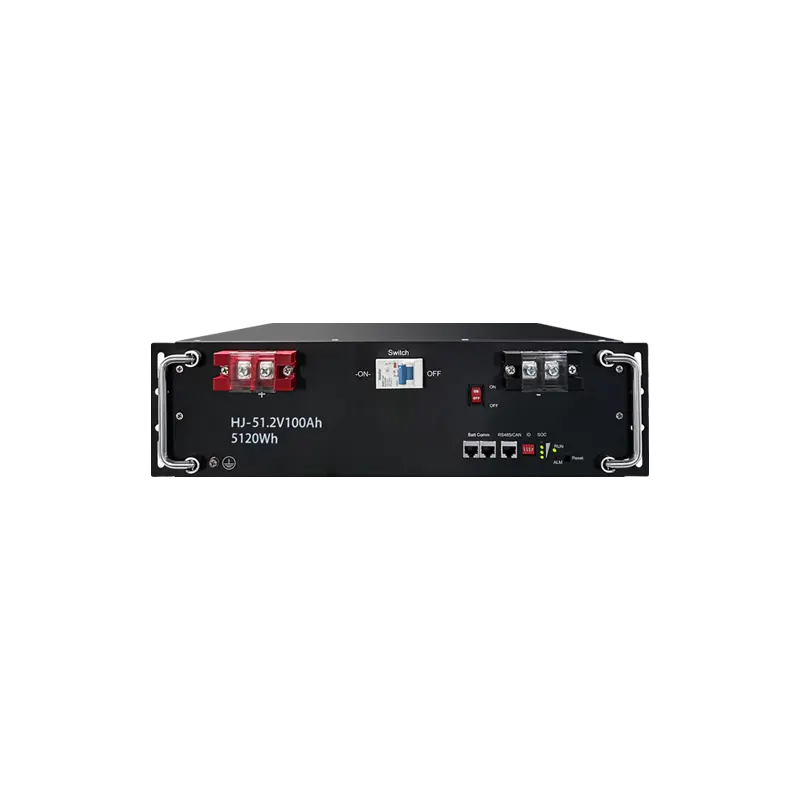
Battery datasheets quote cycle life against a stated depth of discharge, and that figure belongs to the test that produced it, not to any duty cycle a site might impose. For Highjoule's Site Battery Storage Cabinet series the published typical figure is more than 6,000 cycles at 80% DOD. Read it as a test condition: the cells were cycled to 80% depth. It does not follow that 80% is the right everyday target for a solar-hybrid site that must also survive a long cloudy spell.
The practical error is treating one number as both settings. If the EMS lets the pack reach 80% depth every night, the reserve that a consecutive-cloudy-day design was supposed to hold is already spent on the night before it is needed. The diesel engine then starts on a day the sizing intended it to stay off, and the retrofit inverts: the generator becomes the nightly reserve instead of the last resort.
The cleaner arrangement separates two floors. The upper one is the daily cycling limit, the point beyond which the EMS treats further discharge on an ordinary night as abnormal. The lower one is the reserve floor, where the autonomy engineered for the worst realistic stretch of weather begins and where the genset is the intended answer. Between them sits a band that ordinary cycling never touches; only an exceptional event discharges into it.
Setting the reserve floor is a weather calculation, not a battery calculation. It follows the longest credible period of low yield for the site, the load during that period, and how much of that energy the design intends the pack to cover before the generator takes over. Because the reserve is really an amount of energy, it converts into a state-of-charge threshold only once nameplate capacity and the usable window are fixed. A reserve sized in days of autonomy and then expressed as a percentage is far easier to defend in a design review than a percentage chosen because it looked conservative.
Where the discharge floor meets the 48 V interface
A second constraint on the lower end has nothing to do with cycle life. Telecom ICT equipment at interface "A" is specified to maintain normal service across a normal service voltage range of -40.5 V DC to -57.0 V DC, as set out in ETSI EN 300 132-2 V2.8.1. The standard notes that the minimum of that range is based on the distribution voltage drop and the battery cell end-of-discharge voltage.
Below -40.5 V DC, equipment is no longer required to hold normal service. It must still survive the abnormal range of 0 V to -40.5 V DC undamaged and restore itself once voltage returns. So the lowest legitimate discharge floor is not the deepest point the chemistry tolerates; it is the point where the equipment at the far end of the DC run still has headroom. Cable drop eats into that margin, which is why the floor has to be set against the measured voltage at the equipment terminals rather than the busbar reading inside the cabinet.
An illustrative split
For illustration only, take a hypothetical site drawing 5 kW continuously from a 100 kWh battery that the EMS cycles to 70% depth on ordinary days. The daily cycling window is the top 70 kWh and 30 kWh stays below the daily floor. That 30 kWh covers roughly one day of site load and no more, so a second low-yield day reaches the reserve floor and the genset starts. Holding two days in reserve makes the band 60 kWh and leaves 40 kWh for everyday cycling, a materially different duty from the same hardware. Neither figure is a recommendation: the two numbers trade directly against each other, and the trade belongs in the design document rather than in a field engineer's judgement on the night it matters.
Agreement two: write down the thermal envelope and the derating that comes with it
Heat is the other setting that looks fine on a commissioning report and goes wrong in the second summer. Lithium iron phosphate cells degrade faster at higher temperature, and the effect is not confined to average ambient conditions. A study cycled LFP-graphite cells across temperature permutations between -20 °C and 30 °C and found that degradation rate followed a quadratic relationship with charge temperature and a linear one with discharge temperature. Charging at +30 °C while discharging at -5 °C produced the highest measured degradation rate; cycling within -20 °C to 15 °C produced much lower degradation (Ruiz Ruiz et al., Journal of Visualized Experiments, 2018). Those results describe those cells over 100 cycles. They establish that charge and discharge temperature are material ageing variables; they are not a capacity-loss rate for any given installation.
For a site in a hot, dusty region the relevant temperatures are not the ones at the weather station. They are the air temperature inside the cabinet at mid-afternoon, with the enclosure in direct sun, the ventilation path partly blocked by dust, the pack cycling and the electronics working. A declared operating range describes the ambient conditions the enclosure is rated for. It does not promise that the cells inside sit at a comfortable temperature at the top of that range.
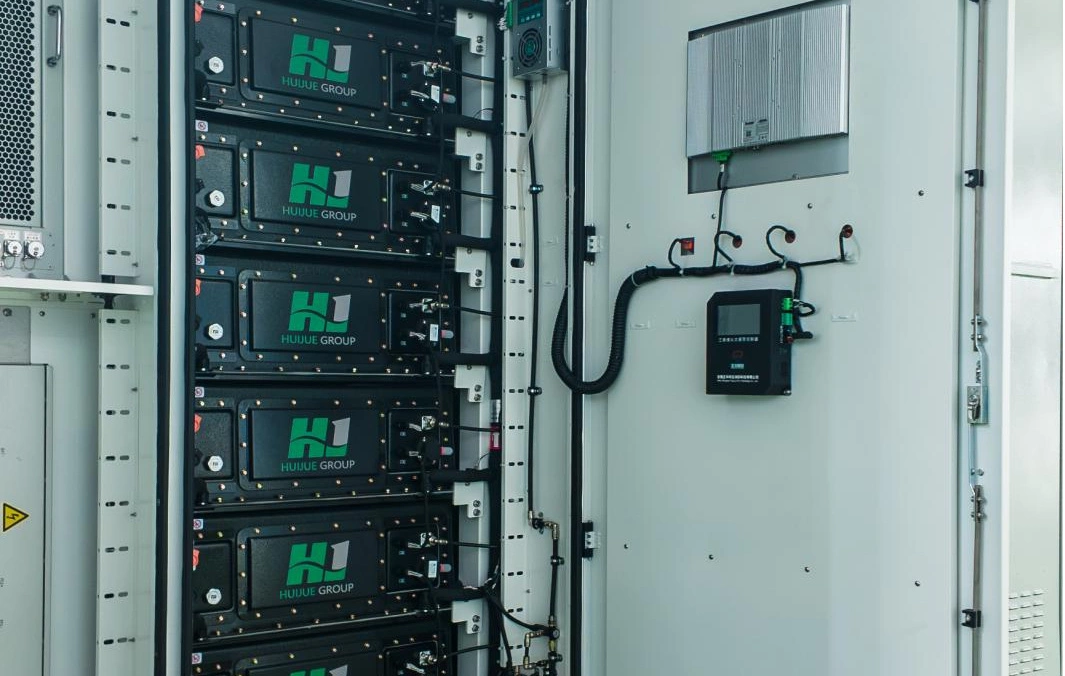
Cooling method is a selection decision with a site-specific answer. Highjoule's Site Battery Storage Cabinet series is air-cooled, with liquid cooling offered as an option, and the series is stated at a typical operating temperature of -20 °C to +55 °C. The HJ-SG-D03 outdoor communication energy cabinet uses intelligent temperature control with heat exchange or air conditioning and automatic switching between modes, stated at -20 °C to +75 °C with a -40 °C start capability. Two different products carry two different envelopes, which is why the envelope has to be read against the model offered for a specific site rather than against a product family.
Derating conditions deserve the same scrutiny. The D03 parameter table, for instance, applies an altitude correction: from 1800 m to 4000 m the temperature falls by 1 °C for every additional 200 m. A site at 2,400 m therefore gives up part of its upper margin before the enclosure has done anything. In hot lowland sites the constraint usually runs the other way, and the question becomes how much continuous output the pack and the power conversion equipment can sustain once cabinet air temperature approaches the top of the rated band.
So the thermal answer needs to be written as conditions, not a single number: cooling type, rated ambient band, altitude correction if any, dust and solar-exposure assumptions, and whether the rating is continuous or short-term. A dusty site also needs a maintenance item attached to that envelope. Air cooling depends on an air path, and a blocked filter or fouled heat exchanger turns a compliant thermal design into a summer derating nobody planned for. If the specification does not name the filter and cleaning interval, the O&M contract has no basis for scheduling one.
Agreement three: decide which alarms reach whom before the site is handed over
An unattended site cannot be walked to. Whatever the EMS knows has to travel over the network, and the alarm list is effectively the site's entire sensory system. Getting that list wrong is a delay rather than a failure, and the delay is measured against how long the battery can still carry the load.
The monitoring capability itself is not the hard part. Highjoule's EMS platform for the Site Battery Cabinet monitors battery health, state of charge and state of health, alarms, temperature and fault history, with remote access through a web portal or mobile app. Equipment-level monitoring is equally concrete: the HJ-SG-D03 monitoring unit takes one analog input for battery temperature and four digital dry-contact inputs, provides four dry-contact alarm outputs, communicates over RS485 and retains up to 1,000 historical alarm records, with sensors for temperature and humidity, smoke, access control and water immersion. Those are the raw materials of an alarm list, not the list itself.
The list has to be assembled for the site's actual failure modes, ordered by how quickly each failure becomes irreversible. A high cell temperature that triggers a charge inhibit is recoverable if someone acts while the sun is still up. A reserve floor crossing during a multi-day low-yield period is recoverable if fuel and a start command arrive before the pack is exhausted. Loss of communication from the site is different in kind, because it removes the ability to see any of the others. A site that treats it as a low-priority event is blind from the moment it occurs, and a generator that will not start gets discovered by a dropped call rather than by an alarm.
Alarm text also has to be specific enough to act on. "Battery fault" tells an operations centre two hundred kilometres away nothing useful. "Cell over-temperature, charge inhibited, cabinet internal temperature 48 °C" tells the responder whether to send a technician, stop charging or start the genset first. Where the EMS exposes state of charge and state of health as separate values, both belong on the dashboard: one says how much room is left tonight, the other says whether the pack will still be capable of it in two years.
The interface question belongs in the delivery scope
Most operators already run a supervisory layer, and the energy cabinet has to land inside it. That means settling how site data reaches it: which protocol the cabinet's EMS speaks on its northbound side, whether the link runs over the operator's own transmission network or a separate backhaul or a local site network, and what becomes of alarms when that path is down. Local retention matters here, since an alarm history stored at the cabinet is what allows a fault to be reconstructed after an outage that also cut communications.
These items are cheaper to settle before the equipment is ordered than after the site is energised. The cabinet's communication options and the operator's monitoring layer need to be named in the same document, together with who configures which alarm and who is notified at what severity. If the acceptance test does not include a deliberately triggered alarm travelling end to end and landing in the operator's system, the first real test will be a real failure.
What this looks like on an off-grid deployment
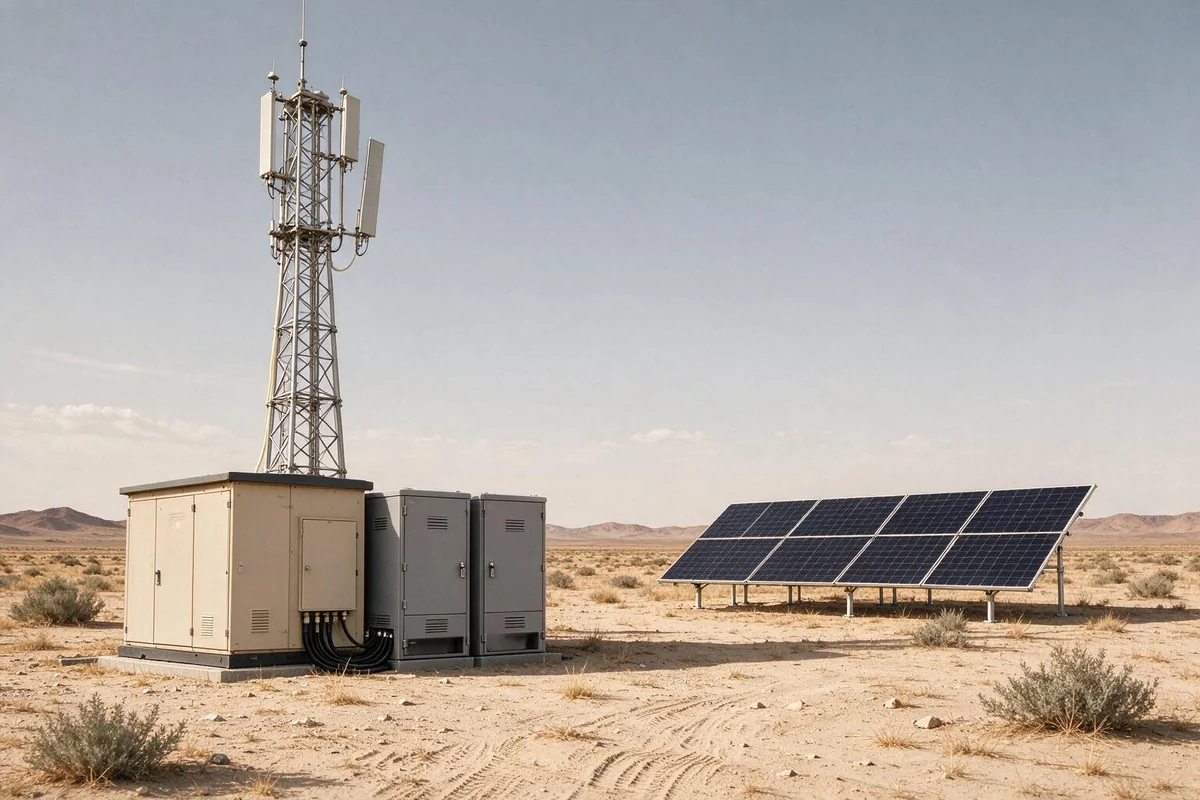
In Mauritania, Highjoule supplied integrated power for 7 communication base stations with no grid support, using an off-grid system that combines photovoltaic power, energy storage and diesel generators. The project's basic equipment list names an outdoor cabinet, temperature control equipment, an FSU monitoring unit, a hybrid power system, a photovoltaic system and a diesel generator. Read that list as a map of the three agreements: the outdoor cabinet and temperature control answer the thermal question, the hybrid power system carries the priority logic, and the FSU monitoring unit is the path by which the site becomes visible to a remote operations team. The results of that project belong to its own conditions; it is the equipment categories that make the deployment form legible for another site's design review.
All three agreements land on the same bill of materials. The reserve band is a control parameter in the hybrid system, but it is meaningless without a cooling design that keeps the pack inside its envelope, and neither survives a multi-day event if the alarm that should have called someone never leaves the site.
Six questions for the design review
The design review is the right moment to force these answers, because afterwards each one becomes a change order or an outage. An operator specifying a site is asking about commitments the supplier must meet; an EPC designing to an operator's requirement is asking about inputs only the site owner can supply. Either way, they are worth putting in writing.
| Agreement | Question for the design review | Answer that closes it |
|---|---|---|
| Depth of discharge and reserve | What daily depth does the EMS cycle, and what state of charge starts the genset? | Two separate floors, given in kWh first and percentages second, with the reserve derived from a stated number of low-yield days at the site's load. |
| Depth of discharge and reserve | At what terminal voltage does the equipment at the end of the DC run stop holding normal service? | A discharge floor checked against the -40.5 V DC lower bound of the normal service range at the equipment terminals, allowing for distribution drop. |
| Thermal envelope | Which cooling method is supplied, and what is the continuous rating at the site's design ambient temperature? | Cooling type, rated ambient band, altitude correction and dust assumptions stated per model rather than per product family. |
| Thermal envelope | What maintenance keeps the thermal design valid through summer and dust season? | A named filter or heat-exchanger cleaning interval in the O&M scope, with an acceptance condition for cabinet internal temperature. |
| Monitoring and alarms | Which alarms travel northbound, at what severity, and who receives them? | An agreed alarm list covering temperature and charge inhibit, reserve floor, state of health, genset start failure and communications loss, each mapped to a responder. |
| Monitoring and alarms | Over which path does site data reach the operator's supervisory system, and what is retained locally if that path fails? | Named protocol and network path, local alarm history retention, and an end-to-end alarm test written into the acceptance criteria. |
The cabinet-side specifications behind those answers are on the Site Battery Storage Cabinet and outdoor communication energy cabinet pages. Set against a site's own weather record, load profile and supervision layer, they become a configuration rather than a catalogue entry.
A site that gets these three agreements right does not need the diesel engine to disappear. It needs the engine to start for the reasons the design intended, and the operations team to know about it before the battery's last kilowatt-hour is spent.
Find Your Solar + Battery Storage Specialist Now!
* Fill out this form and our experts will help you find the perfect solar storage solution for your home or business.